Thursday, December 31, 2009

The Strolling Year in Review 2009

As I retrace my steps from 2009, I feel like the city also shifted into reverse, revealing intriguing
glances of forgotten places under the layer of our estranged modern landscape. Where is that lost subway station? What grows under those tracks? Who grows these apples? Over the last year, the proliferation of artisanal DIY goods sold in medieval-like outdoor markets or peddled on trucks by young urban craftspeople conspired with recession economics to force us to at least think about the means of production.

In addition, the reconfiguration of Times Square into a pedestrian center, the paving of 200 miles of bike lanes, the expansion of the waterfront, the opening of Governor's Island and the High Line literally and figuratively opened up new and greener points of view. The arrival of 2009 and the celebration of the 400th anniversary of Henry Hudson's encounter with the New World encouraged such geographical retrospection, allowing us to imagine the island of Mannahatta in its more primordial state, full of useful biodiversity, and asking us what we should do with these uncovered layers of history. Weather-wise, 2009 was a little strange. The summer never really arrived.

As always, New Yorkers bid farewell to the places and neighborhoods they once remembered, intoning the melancholia of loss - the old Washington Square Park, the old Lower East Side, the Garment District, the celebrated restaurants now shuttered (Cafe des Artistes, Tavern on the Green, Rainbow Room, etc.). Traditional family businesses that have defined the special texture of New York neighborhoods pass away too soon, sadly replaced with the kind of drugstore, big chain store or bank branch found in the banal suburbs. The loss of the familiar extends to the media where The New York Times lost staff members, and Gourmet printed its last issue. Many local bloggers kept up the mantra of loss. In local politics, the billionaire mayor won re-election but not by much. Yet, some good things happened. The homicide rate in 2009 for New York City was the lowest recorded, and Bernie Madoff is in jail. The Yankees won. The media landscape is wide open.

In 2009 we learned to adapt to the mobile fabric of everyday life, from locating ourselves through phone applications such as foursquare to following world revolutions on Twitter to chasing sandwiches, cupcakes, and ice cream on a mobile truck. Some of us welcomed permanent additions to the built environment including Diller and Scofidio's renovation of Alice Tully Hall, Thom Mayne's intriguing administration building for Cooper Union, and the aforementioned High Line. Several bright new restaurants opened, but the culinary trends of 2009 kept it safe with variations on comfort food. It was a great year for fried chicken.

WOTBA Walks and Musings from 2009

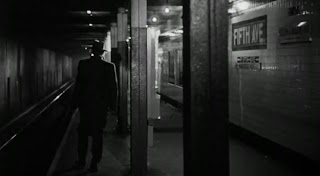
The Presidential inauguration in January 2009 led me to three great Presidential sites in NYC - Grant's Tomb, Chester Arthur's apartment (now Kalustyan's), and Theodore Roosevelt's birthplace. The winter light on the side of buildings in February invited an exploration of the life and work of painter Edward Hopper and the location of the diner.

Tuesday, December 22, 2009

The Road Home from the Holiday Rush

Though the streets of New York may still be crowded with holiday shoppers, some residents and visitors are now finding their way home. With two days left to Christmas Eve, it's time to sort gifts, find the wrapping paper, bake the cookies, and warm the tired feet.

Bleecker and Lafayette

Santa himself should be a little tired by now, dreaming of a vacation in warm weather.

Sunday, December 20, 2009

A Sunday Morning Walk in Washington Square in the Newly Fallen Snow


Just in time for the holidays, winter begins on cue. Images from the aftermath of last evening's snowfall in Washington Square Park and nearby streets in Greenwich Village. Approximately 10.9" were recorded in Central Park.

Wednesday, December 16, 2009

An Advanced Self-Guided Walk into the New York Holiday Vortex

Why should the tourists have all the fun? Some city residents may prefer to steer clear of the crush of shoppers in midtown Manhattan, especially that stretch of Fifth Avenue south of Grand Army Plaza, namely to avoid all the visitors, but sometimes that's the best place to catch the holiday spirit. The clamor and bustle of the avenue can get loud, yes, but the occasional clang of the Salvation Army worker's bell intones the collective cultural memory of the holiday. Walking down the avenue, the mingled smells of roasting chestnuts, the exhaust from taxis along Fifth Avenue, the whiff of coffee in paper cups, and the collective fragrance of department store perfume counters conspire to bless even the weariest soul with a holiday spirit. As the sun sets, the dazzling street and window lights come on just in time to make you forget just how cold it is outside. So go for it! A walk from the intersection of 59th Street and Fifth Avenue south to Macy's on 34th Street encompasses the time-honored traditions of New York during the festive season. We put on a good show here, so we may as well enjoy it ourselves. If you linger too long, however, the magic departs quickly.

The walk described on the map begins just north of the intersection of 59th St. and Fifth but takes an immediate jog over to Madison Ave. If you're looking to see dressed-up store windows, don't miss Steuben's and Barney's and other nearby stores on Madison. Then walk back to Fifth Ave and explore the famous children's store, FAO Schwarz. Stroll over to the west side of the avenue to enjoy the windows and shopping at Bergdorf Goodman. Now, cross the street and wander south to Tiffany's, the Trump Tower, and Cartier, and then cross back to Bendel's and the Lindt Chocolate Store. Or, stay and visit Elizabeth Arden's famous Red Door. At this point you may as well walk the half-block west to the MoMA store to shop for stocking stuffers or to catch the Tim Burton exhibition at the museum.


View Favorite Stops for the Holidays in New York: A Walk in a larger map

Go back to Fifth Avenue, and St. Patrick's Cathedral, Rockefeller Center, and Saks Fifth Avenue quickly come into view. Listen to music, look at the tree, and then buy something. From there it's just a short walk to Bryant Park for the market stalls, ice skating and other events. Then it's on to Lord & Taylor where you may want to buy something. The walk finally ends, like the parade, at Macy's on 34th Street. You've walked a little over 2.5 miles. After this intense New York holiday experience, you may need a little something to pick you up. Macy's has several places for refreshments, including a bar in the cellar of the store.

This self-guided holiday walk is designed for the advanced flâneur only. Those attempting this journey will need mental fortitude, extreme poise, a sense of adventure, sensible but attractive shoes, a wallet with some cash or credit cards, and above all, an upbeat frame of mind. If these personal requirements can be met, then one should expect nothing short of a holiday miracle. You've seen it in the movies.

Images by Walking Off the Big Apple, an advanced flâneuse, who cannot escape the New York holiday vortex.

Monday, December 14, 2009

Holiday Shopping in New York's Best Museum Shops: A List

Shops attached to museums have advanced way beyond Claude Monet totes, a Rembrandt calendar, Degas notecards and a Van Gogh refrigerator magnet. Those were the Dark Ages of museum merchandising. The great museum shops of contemporary New York feature hundreds of well-designed gifts and collectibles, each reaching out to the arts-minded citizen of the world. And their kids, too. Babar-themed gifts at the Morgan, cuddly yak animals at the Rubin Museum, a book on rock & roll photography at the Brooklyn Museum, a cake server in the shape of a shoe from the Whitney, or a tile of the Bleecker Street subway station at the New York Historical Society are just a few of the beyond-the-ordinary finds in the city's museum shops.

The following list features just a sample of gift items from only a selection of New York museums. Let Walking Off the Big Apple be your personal museum shop shopper:

Cooper-Hewitt, National Design Museum has opened a holiday satellite shop in collaboration with Vitsoe, the maker of a shelving system at 33 Bond Street in NoHo. The store features 33 pre-wrapped gifts. Favorites include the cute red Swedish-designed Steamliner F1 car. ($56/$50.40 for members), the Daruma Money Bank ($36/$32.40), and the offbeat calendar titled "Cats Let Nothing Darken Their Roar." ($40/$36 for members)

• At The Frick Collection Museum Shop look for the Riesener Tin Pencil Box with an elegant design by Jean-Henri Riesener (French, 1734–1806). Inside, 12 triangular black wooden pencils with colored tips. $16.95/$15.25. Also attractive, an assortment of blank journals with a Vermeer painting on the front cover.

The Shop @ RMA. The Rubin Museum of Art. How about a cuddly Yak? Indigenous to the Himalayas, the plush yak comes in two sizes, 12" and 9." $25.00/$22.50; $15.00/$13.50. Or a collection of Felt Flowers, handmade in Nepal. Prices range from $4.25 to $15.00. Member: 10% off for members.

• Frank Lloyd Wright gifts may be found far and wide, but go to the Guggenheim Online Store. After all, FLW designed the museum. A fun family project could involve assembling the LEGO version of Fallingwater, Wright's most famous residential design. The kit contains 811 pieces/bricks. $100.00/ $90.00 Members Price. Also nice - the Frank Lloyd Wright Red Sketchbook, a red leather slipcase embossed with Wright's "May Basket" design. $35.00.

• Browsing the enormous store in The Metropolitan Museum of Art in person can be entertaining for hours. Quite stunning - The Parrots, British artist Edward Lear’s 42 illustrations of the beautiful birds here reprinted and available as loose-leaf sheets. In a decorative box. $100/$90. Also, the Francis Bacon Exhibition Catalogue, in hardcover or paperback. $40.00-60.00/$36.00-54.00. As house gifts, check out the the popular Baroque Glass, ornate tumblers based on designs of 19th century American glassmaking. $10/$9. For the New York-centric, see the 4D Cityscape: New York City, a time puzzle with over 600 puzzle pieces to rebuilt the city from the past to the future. $49.95/$44.95.

Friday, December 11, 2009

Acting New York: Thelma Ritter, An Appreciation

Based on an uncanny ability to communicate the wisdom of the streets, Brooklyn-born character actor Thelma Ritter (1902 or 1905?-1969) found her way into some of the best supporting roles in motion pictures of her generation. After performing in school plays at Public School 77 and then studying at the American Academy of Dramatic Arts, she acted in a few radio and stage parts before putting her show business career on hold to raise a family with her husband, an actor turned ad executive. She was in her forties when a friend of hers, the director George Seaton, invited her to play a small role of a Macy's shopper in his new film, Miracle on 34th Street (1947). With many scenes filmed on location at the Macy's Thanksgiving Day Parade and inside the store, Ritter's bit of New Yorkese added a sense of authenticity to the fantasy holiday tale. According to biographies, Darryl F. Zanuck was so impressed with her performance that he had her small role expanded.

In time Ritter would make powerful appearances in subsequent pictures, often playing a kind of quintessential street savvy New Yorker. In a Letter for Three Wives (1949) director Joseph Mankiewicz (1909-1993) gave her a juicy role as a funny beer-loving neighbor. In one of the director's next films, the great All About Eve (1950), Ritter played the part of Birdie, an ex-vaudevillian and aide to Bette Davis's Margo Channing, who saw straight through the emotional manipulations of rising star Eve Harrington. Bringing a hard-boiled Brooklyn cynicism to many roles, Ritter often played the truth-telling realist to balance the starry-eyed qualities of the main protagonist. She was nominated as Best Actress in a Supporting Role for All About Eve, annually repeating Academy Award nominations in the same category with The Mating Season (1951), With a Song in My Heart (1952), and Pickup on South Street (1953). She was later nominated for her funny role in Pillow Talk (1959) and for a serious role as the mother of the imprisoned Robert Stroud (Bert Lancaster) in Birdman of Alacatraz (1962). Her other notable roles include featured supporting performances in Rear Window (1954), The Misfits (1961), and How the West Was Won (1962).

Tuesday, December 8, 2009

A Selection of Choral and Instrumental Music Concerts in New York for the Holiday Season

During the holidays in New York, the sounds of the season fully resonate in the city's spectacular venues such as Carnegie Hall, The Cloisters, the Met's Medieval Sculpture Hall, Avery Fisher Hall, among others, as well as in the city's many historic cathedrals and churches. Walk into any church in the next few weeks, and you're likely to catch a concert or rehearsal. Many of the events have become annual favorites, whether it's hearing The Waverly Consort play medieval music inside the halls of The Cloisters or Paul Winter's Consort howling in the solstice under the great arches of St. John the Divine Cathedral.

The musical holiday season tends to favor a standard selection of favorite carols in addition to grand works such as Handel's Messiah, but for many, including myself, there's nothing quite like Benjamin Britten's mystical and haunting A Ceremony of Carols, Op. 28, a composition from 1942. For the few years prior to 1942, the English composer had been living with his lifelong partner, the tenor Peter Pears, in Woodstock, New York. In New York, he would be near his friends Aaron Copland, W. H. Auden, and Christopher Isherwood. When England entered World War II, British citizens abroad were advised to stay where they were, and in 1940 Britten and Pears moved to Brooklyn Heights.

While in New York, Britten composed music for American high school musicians, including the 1941 operetta Paul Bunyan. In 1942 Britten and Pears returned to England, though their declared statuses as conscientious objectors threatened to subject them to tribunals and assignments in noncombat duty. On the dangerous five-week voyage to England in March and April 1942, with waters full of U-boats, Britten composed A Ceremony of Carols, an unusual work featuring three treble voice parts and harp. Based on the plainsong (Gregorian chant) and medieval and 16th century poetry, Ceremony invokes a forgotten distant mysticism buried within the frosts of winter. The acoustics of a church, especially for the processional and the departing recessional, is almost necessary for the full experience.

A Selection of Choral and Instrumental Music Concerts in New York for the Holiday Season

Choir members of the Abyssinian Baptist Church
Gospel music, spirituals, and Christmas carols
Thursday, December 10, 2009, 8:30 PM
The Metropolitan Museum of Art, Medieval Sculpture Hall. $60.00

The Waverly Consort: The Christmas Story
Dec. 12–13, 1:00 p.m. and 3:00 p.m.
The Cloisters, 99 Margaret Corbin Dr., near Park Dr.; 212-923-3700
Thirteen-member ensemble presents a programs of processionals, antiphons, hymns, and Mass compositions from the tenth to the fifteenth century. and features both vocal and instrumental music. Price: $45

Sunday, December 6, 2009

Shot in the Naked City: Cinematic Mysteries and Film Noir Before 1960

Movies and television programs that film on location in New York are fairly ubiquitous these days. Walking through the city it's easy to stumble upon movie crews and their rows of equipment and catering trucks and rolls of cable necessary for shooting a scene. Contemporary audiences come to expect that a story set in New York should include recognizable streets and landmarks such as Grand Central Terminal, the Metropolitan Museum, the United Nations, Times Square and so forth. Yet, filming on location has not always been a requirement for a movie set in a particular place. The Thin Man, for example, as previously discussed, was shot in Hollywood, relying on references in the dialogue to situate the story along Fifth Avenue and the east side.

The earliest days of cinema before the move to Hollywood did feature real New York locations from time to time, as the city was the center of filmmaking from 1895 to 1910. For a glimpse of New York in 1901, just have a look at "What happened on Twenty-third Street, New York City" by Thomas Edison (Library of Congress). There are more short films like this one from the early era. The availability of talent on the Broadway stage provided a convenient local source for actors and stage personnel. Outside the city, places like Fort Lee, New Jersey and Cuddebackville, New York became popular for their picturesque natural scenery, providing excellent substitutes for imagining the Wild West. By the 1920s, the Astoria Studios in Queens, built by Paramount Pictures, turned out several films, including the Marx Brothers' first features (see extended post on Astoria and the Marx Brothers), but the productions normally stayed inside the walls of the studio. By the early 1930s New York as a center of filmmaking lost out to Hollywood.

The popularity of mysteries, crime dramas and the film noirs of the 1940s and 1950s, however,  benefited from the look of a real city, and setting the story in recognizable urban locations contributed to the sensation of real suspense. One of the first directors to reengage audiences with a real New York was none other than Alfred Hitchcock. With Saboteur (1942), a story about a wartime munitions worker falsely accused of sabotage, the director made use of several New York locations, including the finale at the Statue of Liberty. One of the memorable scenes in Spellbound (1945) takes place at Grand Central Terminal. Many more Hitchcock films exploit the tensions naturally available on crowded urban streets. Movies by other directors would soon follow.

Thursday, December 3, 2009

New York Museum Exhibitions: Winter 2009-2010, with Openings in December, January, and February

UPDATED LIST: Click here for Spring 2010 exhibitions, with openings in March, April, and May.

This winter, several museums in New York plan to show the work of well-known contemporary artists. Kiki Smith installs a site-specific installation at the Brooklyn Museum exploring the life cycle of the woman artist. Tino Sehgal will present a new constructive situationist work involving children and teens within the rotunda of the Guggenheim. At MoMA, Gabriel Orozco will blur the lines between objects of art and everyday life, and later William Kentridge will be the subject of a large-scale exhibition at the museum. The Whitney Museum plays host to video artist Omer Fast. The museum's famous Biennial opens February 25.

What follows is a list of most museum and other art center exhibitions currently on view in New York City along with dates of upcoming exhibits that are scheduled to open in December, January, and March. Upcoming exhibitions are noted in bold type.

American Folk Art Museum, 45 W. 53rd St.:
Thomas Chambers (1808-1869): American Marine and Landscape Painter
Through March 7, 2010
• Approaching Abstraction
Through September 6, 2010

Brooklyn Museum, 200 Eastern Parkway, Brooklyn, New York:
Healing the Wounds of War: The Brooklyn Sanitary Fair of 1964
Elizabeth A. Sackler Center for Feminist Art, Herstory Gallery, 4th Floor
Through September 12, 2010
Kiki Smith: Sojourn
Elizabeth A. Sackler Center for Feminist Art, Herstory Gallery, 4th Floor
Through September 12, 2010
To Live Forever: Art and the Afterlife in Ancient Egypt
Robert E. Blum Gallery, 1st Floor
Through May 2, 2010

Cooper-Hewitt, National Design Museum, 2 East 91st St.
:
Design USA: Contemporary Innovation
Through April 4, 2010
Quicktake: Rodate
Through March 14, 2010

El Museo del Barrio, 1230 Fifth Avenue at 104th Street:
Nexus New York: Latin/American Artists in the Modern Metropolis
Through February 2010

Frick Collection, 1 East 70th Street:
Masterpieces of European Painting from Dulwich Picture Gallery
March 9, 2010 - May 30, 2010

Grey Art Gallery (NYU), 100 Washington Square East:
• Downtown Pix: Mining the Fales Archives 1961-1991
Through April 3, 2010

Tuesday, December 1, 2009

The Thin Man Walk: A New York Holiday Adventure with Nick and Nora Charles

Note: This holiday walk is part of the event NYC Bloggers Do the Holidays. See the end of this post for participating blogs and the links to their special posts for the season.

Line up the cocktails. As Nick says, "You see the important thing is the rhythm. Always have rhythm in your shaking. A Manhattan you shake to foxtrot, a Bronx to two-step time. A dry martini you always shake to waltz time." If ever a couple possessed complementary drinking rhythms, it would have to be Nick and Nora Charles, the much-envied glamorous cocktail-swilling quick-thinking duo of Dashiell Hammett's The Thin Man. Inspired by the writer's blossoming affair with playwright Lillian Hellman, the novel, published in January of 1934, motivated MGM to rush a cinematic adaptation into production. The movie, released in late May of 1934, proved popular enough to spawn sequels, foremost because of the stellar chemistry and witty performances of William Powell as Nick and Myrna Loy as Nora. Decades later, many people still search for their own Nick or Nora. Beyond the playful banter, the partying Charleses exude a confident security and ease in their relationship, a high comfort level that even excessive alcohol consumption can not fully explain. As a married couple, they know the secret to keeping the flame alive.

Nora: Nick, Nicky. Are you asleep?
Nick: Yes.
Nora: Good. I want to talk to you.

In addition to the sparkling dialogue of the lead characters, one a wealthy heiress and the other an ex-detective, shake into this bubbly mix a convoluted murder mystery plot, a dysfunctional family, and above all, the tinsel of New York during the holidays. Set during late December 1932 before the repeal of Prohibition in 1933, The Thin Man is filled with allusions to New York department stores, speakeasies, and supper clubs popular during the city's formative Depression years. Many of the references in the book match real locations such as The Plaza Hotel, Lord & Taylor, Saks Fifth Avenue, and the now-defunct Reuben's, a much-loved deli and bar that sported dark wood paneling and red-leather seats.

The actual murder mystery takes place in the E. 50s near the location of the Sutton Club Hotel, the place where Dashiell Hammett wrote the book. During the 1930s this area around the East River was a striking mix of luxury apartments popular with celebrities and shabby tenement buildings, the kind that would house Sidney Kingsley's The Dead End Kids. Hammett's novel also refers to Nick and Nora attending a play in the Theater District at the Little Theatre (now the Helen Hayes) and to the opening night of Radio City Music Hall, two references from December 1932 that ground the fictional story within real events in the city. While the movie omits many of these specific New York quotations (after all, it was filmed on a back lot in Hollywood), it elaborates on the visuals of the Yuletide season and plays up the flirtatious banter.

Nick: I'm a hero. I was shot twice in the Tribune.
Nora: I read where you were shot five times in the tabloids.
Nick: It's not true. He didn't come anywhere near my tabloids.

For the following walk, see if you can borrow an Asta for the day, either a schnauzer (novel) or a wire-haired fox terrier (movie, played by veteran movie dog Skippy in his debut performance). Good luck sneaking him into Lord & Taylor and "21." Later, you can say, along with Nora, that the dog "dragged me into every gin mill on the block."

The Thin Man Self-Guided Walk: Annotated Guide and Map

Note: Most placemarks indicate locations from the book, except where noted.


View The Thin Man Walk: Places in New York from Dashiell Hammett's Novel in a larger map

• Formerly the Sutton Club Hotel, 330 E 56th St. Hotel where Dashiell Hammett wrote The Thin Man. The hotel was managed by his friend Nathanael West: "When we were very broke, those first years in New York, Hammett got a modest advance from Knopf and began to write The Thin Man. He moved to what was jokingly called the Diplomat's Suite in a hotel run by our friend Nathanael West."- Lillian Hellman, from "Dashiell Hammett: A Memoir," (The New York Review of Books, November 25, 1965). Also in residence were writers James T. Farrell (Studs Lonigan) and Erskine Caldwell (Tobacco Road).

• '21' Club, 21 West 52nd Street. The opening sentence of The Thin Man: "I was leaning against the bar in a speakeasy on Fifty-second Street, waiting for Nora to finish her Christmas shopping, when a girl got up from the table where she had been sitting with three other people and came over to me." Though Hammett doesn't specify a New York address, the '21' Club, as a former speakeasy, would be an appropriate choice. It would also have been a good place to wait for Nora to finish her holiday shopping.

• Lord & Taylor, 424 5th Ave. One of the stores where Nora Charles shops for Christmas presents, accompanied by Asta.

• Saks & Company, 611 5th Avenue (above). Another store where Nora Charles shops for Christmas presents, accompanied by Asta.

Related Posts Plugin for WordPress, Blogger...